
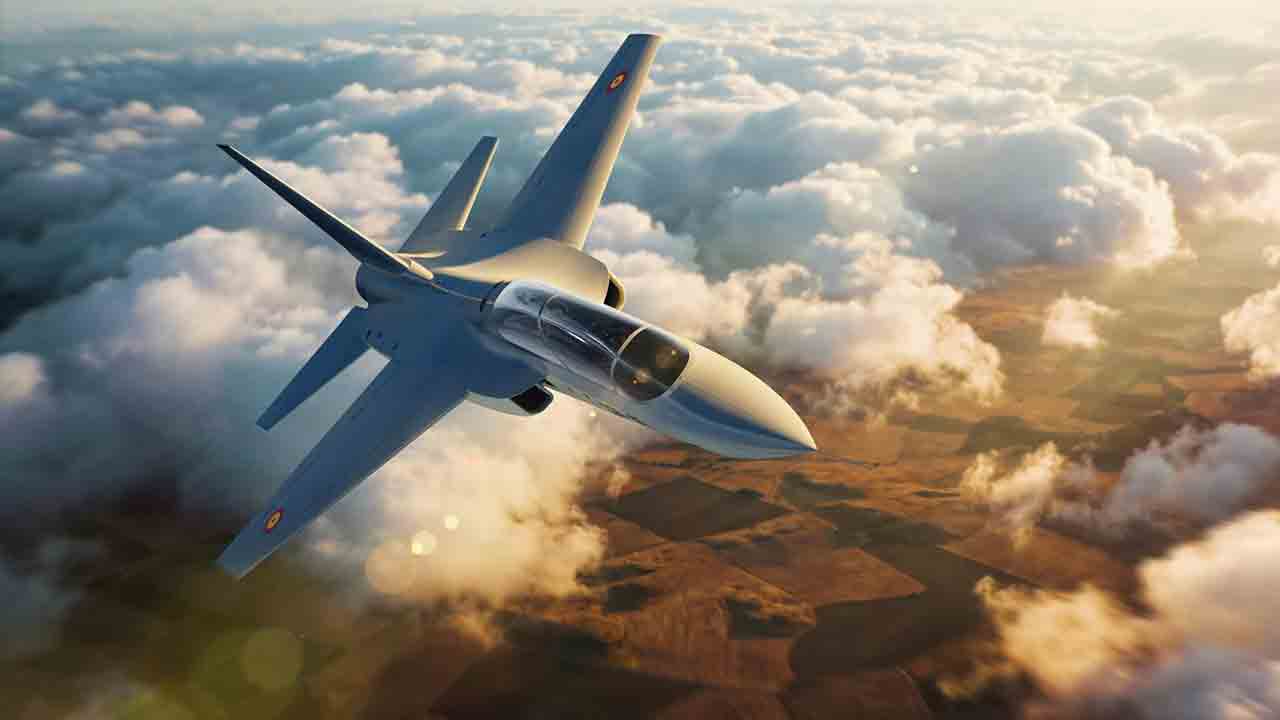
The program led by Airbus will include 30 aircraft based on the HÜRJET, with strong participation from the Spanish industry and a new training center equipped with advanced simulators.
Spain has taken an important step in modernizing the training of its future military pilots. Airbus and a group of Spanish companies presented, in Getafe, the industrial program for the new Integrated Combat Training System of the Spanish Air and Space Force, known as ITS-C.
The project, contracted in December 2025, will replace the current fleet of F-5 aircraft used for advanced pilot training. The new fleet will consist of 30 aircraft based on the HÜRJET, manufactured by Turkish Aerospace, but adapted to Spanish requirements under the national designation SAETA II.
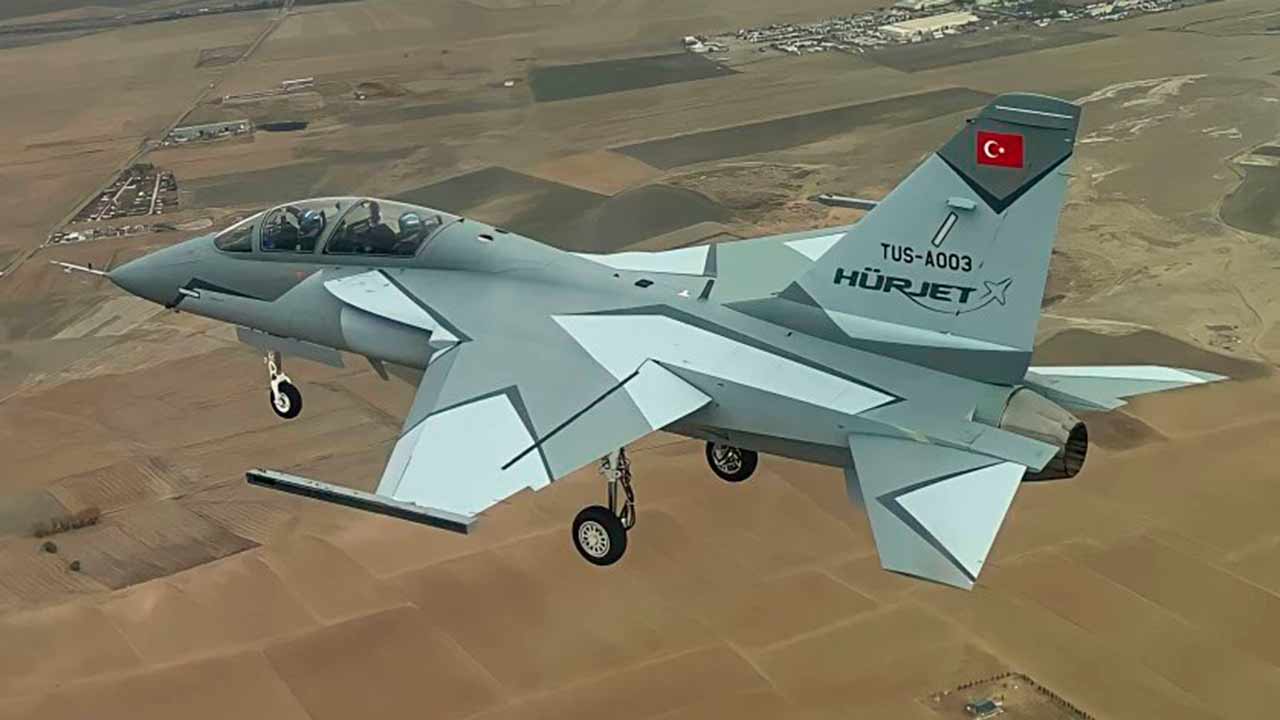
Spanish industry will hold a 60% share
One of the key aspects of the program is the strong presence of local industry. According to Airbus, 60% of the project will involve national participation, including systems integration, technology development, operational support, and fleet maintenance.
Airbus will act as the prime contractor for the program, while Turkish Aerospace will be responsible for the original HÜRJET platform. Based on it, Spain will develop its own version, with avionics, mission systems, and equipment tailored to national standards.
New training center in Talavera la Real
In addition to the aircraft, the program includes the modernization of the Training Center of the Fighter and Attack School at Talavera la Real Air Base, in the Extremadura region.
The site will receive state-of-the-art simulators developed in collaboration with Indra. The goal is to combine flight training and synthetic systems to improve pilot training efficiency and ensure greater fleet availability.
Deliveries will begin in two phases
The first phase of the program is expected to begin in 2028, with the initial delivery of 21 aircraft. One of them will be used by Airbus as a prototype for integrating new avionics and mission systems.
At the same time, the ground-based training system will be developed, with entry into service expected in the 2029–2030 academic year.
In the second phase, the first 21 aircraft and the remaining nine on order will undergo full conversion to the Spanish SAETA II standard. Deliveries of the final version, along with the ground training system, are expected to take place between 2031 and 2035.
Greater technological autonomy for Spain
The program also aims to strengthen the country’s industrial and technological autonomy. Spanish companies will take part in integrating key technologies for onboard and mission systems.
Among the companies involved are GMV, responsible for inertial/GPS systems and the mission computer; Sener, for the DataLink; Aertec, for the remote interface unit; Grupo Oesía, for audio management; Orbital, for the VMDR mission recorder; and Indra, for the friend-or-foe identification system.
With SAETA II, Spain aims to modernize pilot training, reduce external dependencies, and expand the capabilities of its domestic aerospace industry in the coming years.
+ Rebels in Mali capture Mi-24 helicopter supplied by Russia
Source and images: Airbus Defence and Space. This content was created with the help of AI and reviewed by the editorial team.
